
Urgent legal translation in Kyiv and across Ukraine
Updated:
At our MovaPro translation company, we have been providing legal translation services in Kyiv and throughout Ukraine for more than 12 years. We are trusted with document translation by individual clients as well as corporations such as PrivatBank, Samsung and LG, and charitable organizations including UNICEF. We guarantee complete confidentiality of your documents, both during the work and after its completion.
With us, you can consult free of charge on all issues related to legal translation — both in person at the office and by calling us. We will calculate the cost within 15 minutes and offer a discount if you order 5 pages or more.
Cost: from UAH 170 (calculated according to the amount of text and the language) Turnaround: from 1 day Consultation: free of charge
Legal translation: what you need to know
Documents from the field of jurisprudence require in-depth knowledge of international law and the legal system of a specific country. A misinterpreted word or phrase, an omitted or incorrect sentence in a contract can cause misunderstandings or disputes between business partners and lead to serious consequences. Our office employs only highly qualified certified translators who have all the necessary skills to perform legal translation.
We translate the following documents:
- laws and normative legal acts;
- contracts, deals and agreements;
- personal documents of citizens;
- founding and corporate documents of legal entities;
- procedural documents (lawsuits, court records, etc.);
- specialized legal literature, legal opinions and memoranda;
- tender documents, various certificates, powers of attorney and more.
We work with materials of all kinds: texts on paper, scans and photocopies, as well as electronic documents in various formats. Each translation undergoes careful editing and proofreading for uniformity of terminology and compliance of the text with the specifics of the legal system of the country where the document will be used.
How we work on a legal translation
- A case glossary. Party names, court designations, and key terms are agreed with your lawyers at the start and fixed in a glossary applied to every document in the matter.
- A team in Trados. Legal translators share one translation memory: phrasing doesn’t drift between documents, even across hundreds of them. Repetitions (boilerplate contract clauses, standard provisions) are not billed at the full rate.
- Layout one-to-one with the original. A legal translation is read next to its source — by a judge, notary, registrar, or opposing counsel. So the translation mirrors the document page for page: seals, signatures, stamps, handwritten notes, and numbering are marked and kept in place. Any formatting mismatch invites doubt about the translation’s accuracy.
- Editor + Xbench. Beyond the editor’s proofread, documents run through automated Xbench checks: numbers, dates, amounts, and the spelling of names and parties are verified across the whole corpus.
- Certification matched to your venue. Translator’s signature, agency stamp, or notarization — we advise which option your specific court, registry, or institution accepts.
A worked example: translation for international litigation — hundreds of pages on tight deadlines in defense of Ukrainian interests.
Cost of legal translation
In Ukraine, the cost of translation is calculated based on the number of characters, not physical pages. One “translation” page is 1,800 characters with spaces, and the cost of translation depends on the language. After receiving the order, our specialists convert the documents into a format that allows the volume of text to be determined accurately. Then, the number of “translation” pages is multiplied by the set rate. We have special rates for standard documents, and regular customers can count on discounts.
| Languages | Cost for 1800 characters with spaces (or 1 standard document) |
|---|---|
| Translation from/to English | 300 UAH |
| Translation from/to Polish | 430 UAH |
| Translation from/to German | 450 UAH |
| Translation from/to French | 450 UAH |
| Translation from/to Spanish | 450 UAH |
| Translation from/to Portuguese | 500 UAH |
| Translation from/to Italian | 450 UAH |
| Translation from/to Croatian | 450 UAH |
| Translation from/to Turkmen | 620 UAH |
| Translation from/to Dutch | 620 UAH |
| Translation from/to Japanese | 650 UAH |
| Translation from/to Lithuanian | 500 UAH |
| Translation from/to Arabic | 650 UAH |
| Translation from/to Latvian | 700 UAH |
| Translation from/to Hebrew | 600 UAH |
| Translation from/to Azerbaijani | 650 UAH |
| Translation from/to Ukrainian/Russian | 170 UAH |
| Translation from/to Bulgarian | 450 UAH |
| Translation from/to Slovak | 450 UAH |
| Translation from/to Swedish | 600 UAH |
| Translation from/to Georgian | 500 UAH |
| Translation from/to Uzbek | 500 UAH |
| Translation from/to Finnish | 590 UAH |
| Translation from/to Hindi | 650 UAH |
| Translation from/to Hungarian | 650 UAH |
| Translation from/to Persian (Farsi) | 650 UAH |
| Translation from/to Korean | 650 UAH |
| Translation from/to Belarusian | 450 UAH |
| Translation from/to Vietnamese | 690 UAH |
| Translation from/to Slovenian | 450 UAH |
| Translation from/to Chinese | 650 UAH |
| Translation from/to Armenian | 700 UAH |
| Translation from/to Kazakh | 620 UAH |
| Translation from/to Turkish | 600 UAH |
| Translation from/to Tajik | 680 UAH |
| Translation from/to Romanian (Moldovan) | 450 UAH |
| Translation from/to Czech | 450 UAH |
| Translation from/to Serbian | 450 UAH |
| Translation from/to Norwegian | 600 UAH |
| Translation from/to Estonian | 800 UAH |
| Translation from/to Danish | 600 UAH |
| Translation from/to Greek | 550 UAH |
The full price list for all languages is on the prices page.
Cost of certification
In most cases, translated documents require certification confirming either that a copy matches the original or the qualifications of the translator who performed the translation. This process ensures that the translation is recognized by the relevant authorities and institutions. There are several certification options.
Certification with the translation agency’s stamp — UAH 100 per document
The fastest and most economical option. This type of certification includes our agency’s stamp, the translator’s name, diploma number and contact details. It is suitable for most non-governmental institutions, schools, kindergartens and, in some cases, for preparing immigration documents for a number of countries such as Canada or the USA. It is important to note that certification with the agency’s stamp does not replace notarization, but for many purposes it is sufficient.
Certification with the translation agency’s stamp is a procedure that adds official standing to a translation, giving it legal force for use in various institutions and organizations. These can be universities, government bodies, immigration services or international companies.
The choice between notarization and certification with the agency’s stamp depends on the specific requirements of the organization receiving the documents. That is why we recommend checking which type of certification is required in your case before placing an order.
Notarized certification of a document copy — UAH 300 per document (up to 10 pages)
Certification of true copies of documents in Ukraine is governed by Articles 75–78 of the Law of Ukraine “On Notaries”. A notarized copy is a photocopy of the original document sealed with the official seal, signature and stamp of a notary, confirming that the copy matches the original.
During certification, the notary verifies that the copy matches the original of an official document of legal significance and seals it with their stamp and signature. Therefore, to certify a copy, the original document must be presented to the notary. It is also possible to certify a copy of a copy, provided that this copy was notarized or issued by the legal entity that issued the original document. In most cases, a notarized copy has the same force as the original document.
It is important to note that a notary may refuse to certify a copy if the original contains erasures, corrections or added text. This is an important requirement of the Ministry of Justice aimed at preventing fraud and document forgery.
Notarized certification of the translator’s signature — UAH 400 per document
To give a translation official status, it must be notarized. During certification, the notary verifies the translator’s diploma and credentials and certifies their signature on the document. The translation is attached to the original or a copy of the document, and a notarial inscription is made on the back of the last page of the translation. The document is bound and signed by the translator and the notary and sealed with the official state seal.
Notarized certification may be required for official use of the translation in Ukraine — in court, for residence permits, tax numbers and other paperwork for foreigners, and for sale agreements, powers of attorney and applications. In many cases, notarization is also required for using documents abroad, but the requirements differ depending on the country and institution, so it is worth clarifying the certification requirements in advance. Learn more on the notarized translation page.
Notarized certification of the translator’s signature + certified true copy — UAH 400 per document (up to 10 pages)
In this case, along with the translator’s signature, the notary also certifies that the copy of the document is a true copy. For this, the original document must be presented to the notary. The procedure covers two key checks: the authenticity of the signature of the professional who performed the translation, and the accuracy of the copy compared to the original.
This type of certification may be needed when the translation is bound to a copy of the document rather than the original, but the receiving institution specifically requires notarized certification of the copy. For example, if you have a single power of attorney in Polish covering the sale of several properties, it should be translated into Ukrainian and the translation certified and attached to a copy, with simultaneous certification of the copy as a true copy. The notary or official executing the sale and purchase agreement will take the power of attorney and keep it in their archive. If you need the power of attorney again in the future, have the translation made with a notarized copy and hand it to the registrar — the original stays with you.
Bilingual notarized certification — UAH 400 per document
In this case, the notary certifies the translator’s signature and, if necessary, the copy of the document. The certification text is written in Ukrainian and duplicated in the target language. This option is recommended when the translation is intended for use abroad.
The bilingual certification text is sealed and signed by the translator and the notary. As a result, the certified translation will be understandable to the foreign institutions it is submitted to, since the notarial certificate is also written in the language of the country where the translation will be used.
The wording of the notarial inscription certifying the translation and the copy of the document is established by the Ministry of Justice of Ukraine. Therefore, the certification must include the Ukrainian text, while a duplicate in the target language can be added at the client’s request.
What the finished document looks like
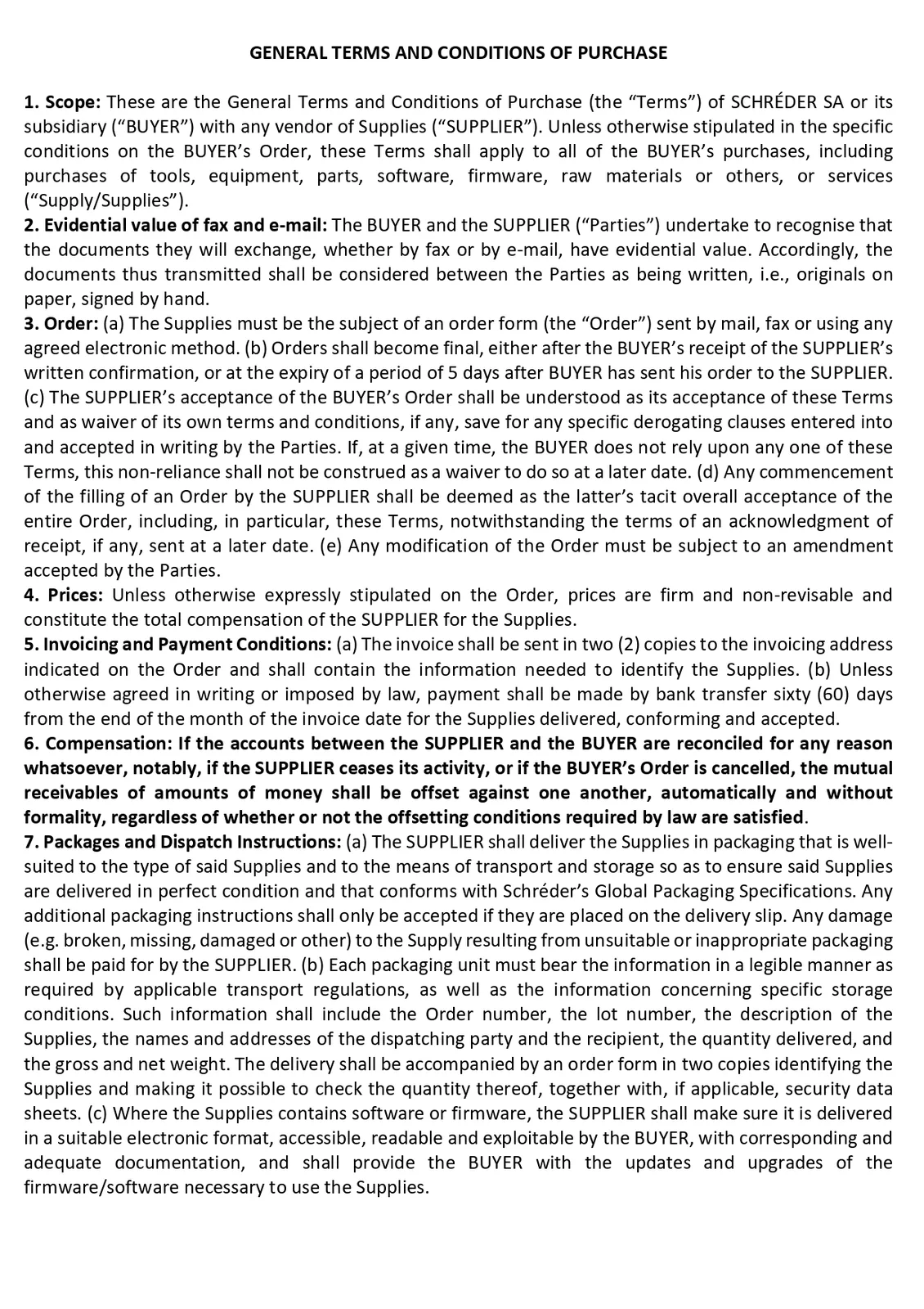
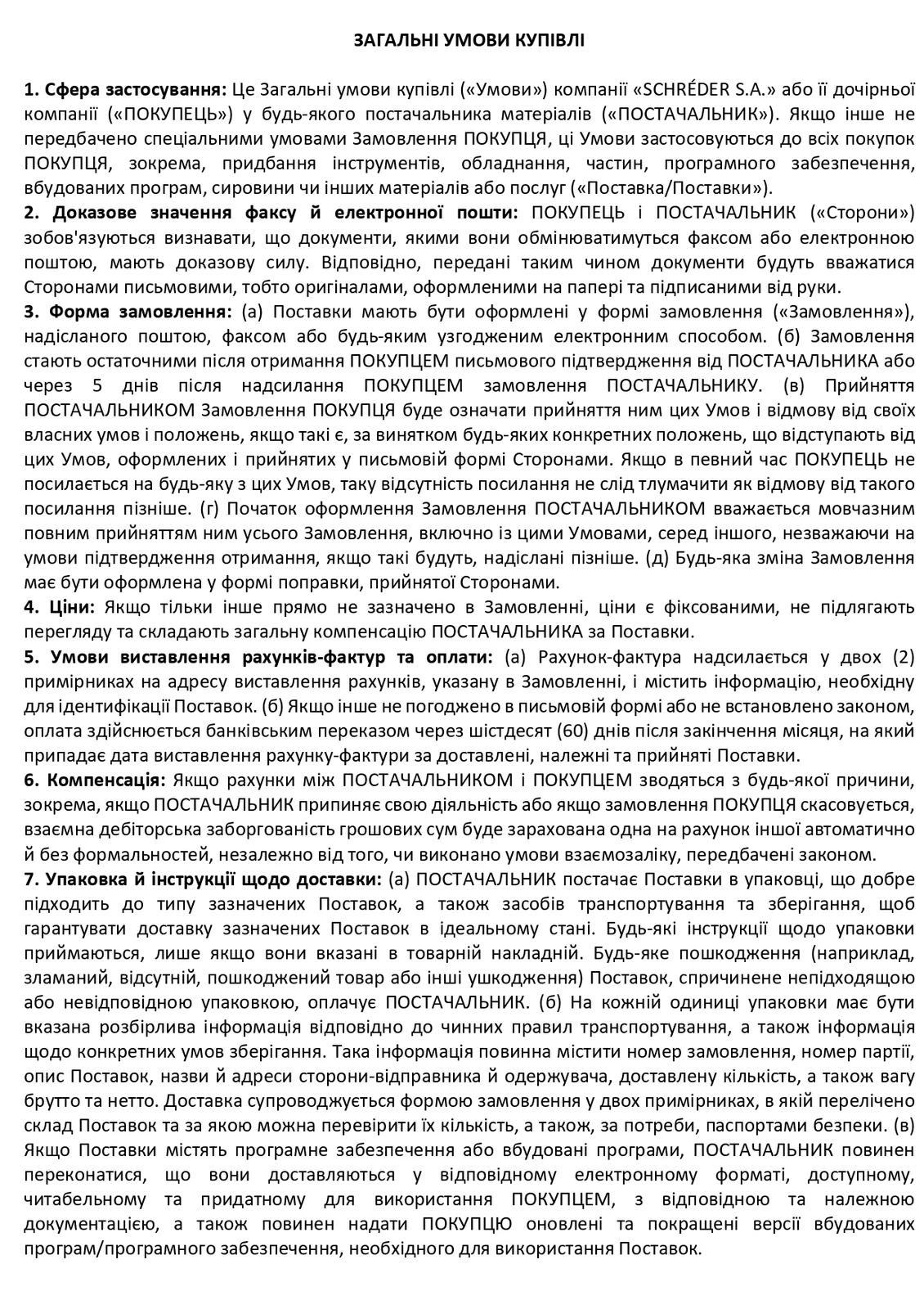
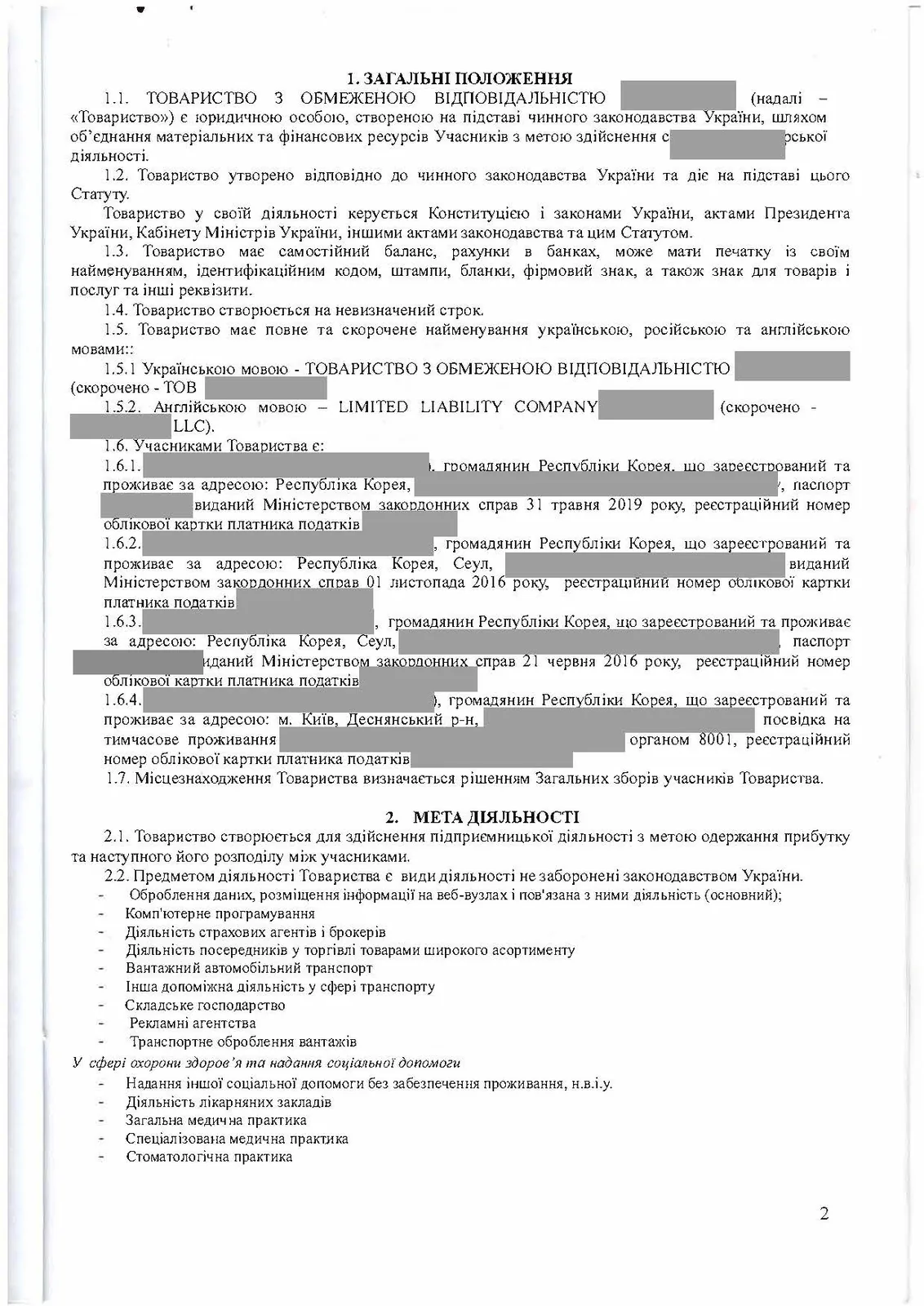
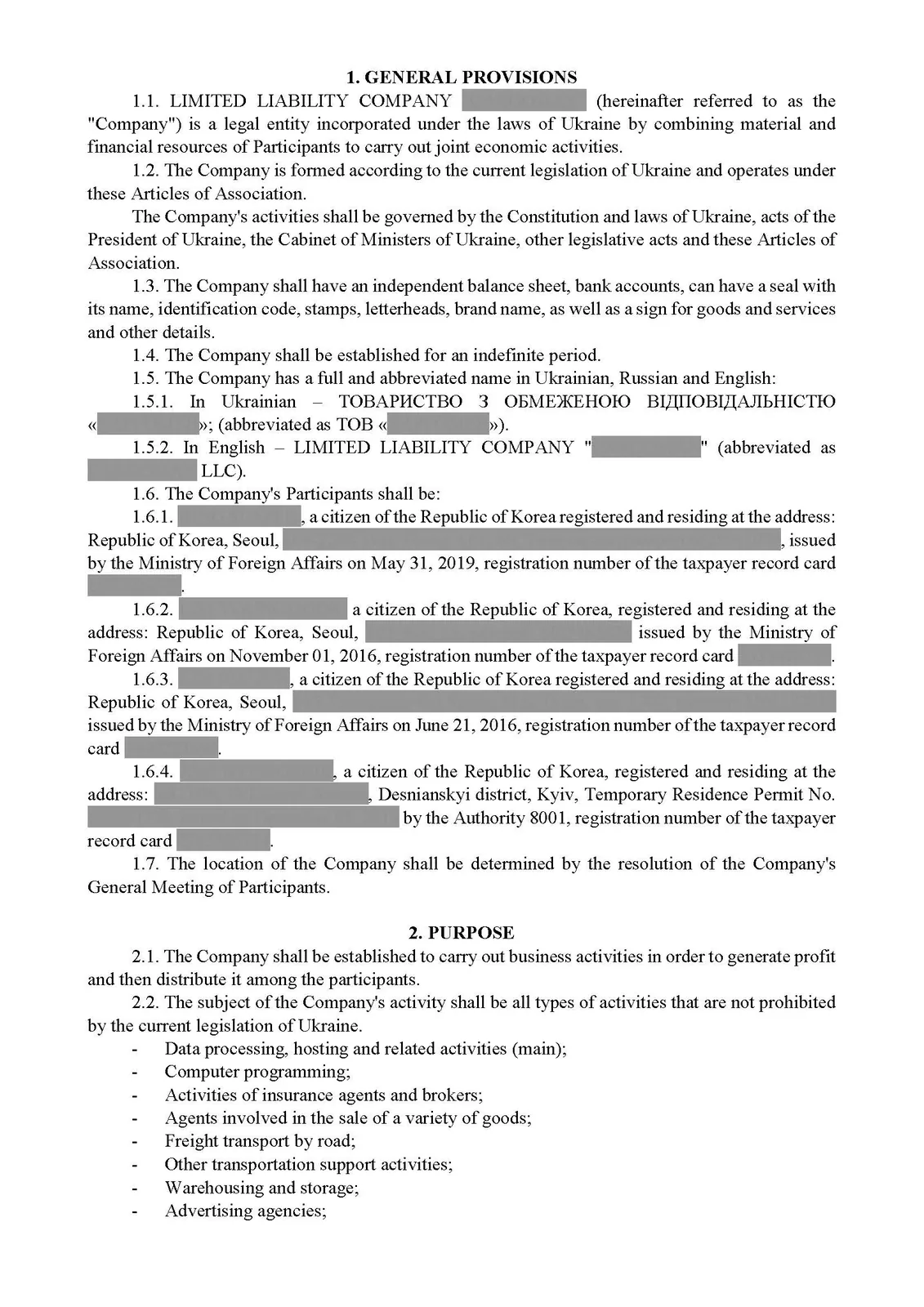
Click to enlarge
Software we work with
We work in the industry’s leading professional software — it guarantees consistent terminology, automated quality checks, and honest pricing: you don’t pay for repetitions.
 Trados StudioThe industry-standard CAT tool: translation memory and glossaries keep terminology consistent — and repetitions are free.
 memoQTranslation memories and term bases for team projects: the same sentence stays the same — across documents and years.
 Phrase TMSCloud TMS with the Language Weaver MT engine — the backbone of our MTPE workflow: faster and ~30% cheaper than classic translation.
 XTM CloudEnterprise cloud TMS for large, recurring volumes — continuous localization for long-term clients.
 SmartcatCloud CAT platform for collaboration: translators and the editor work in the same project simultaneously.
 ApSIC XbenchThe industry-leading QA tool: catches the small inconsistencies a human eye misses.
Professional linguists with 15–20+ years of experience — always on the latest industry-leading software.All our software →
Frequently asked questions
Do you have translators with a legal education?
Our translation center employs professional translators (philologists and linguists) with legal specialization and many years of experience in translating legal texts. Narrow specialization means the translator has a perfect command of terminology, understands the subject and has extensive experience in translating legal documents. The translator always has the opportunity to consult with lawyers and other expert consultants.
How do we simultaneously ensure the quality and high speed of legal translation?
In order to achieve a high speed of legal translation, we involve several translators at once to work on the project. In this case, to achieve high quality, it is important to ensure strict adherence to uniform terms and wording throughout the translation.
How fast is the translation done?
Our standard pace is 8–10 translation pages per day. First, the manager accepts the order and assigns it to a specialized translator; after the translation is completed, the document is edited and proofread, and certification or typesetting is performed if needed. For urgent orders, we optimize our process to ensure fast turnaround — even within hours. The cost of an urgent translation is usually one and a half times higher than a standard one.
Where can I order a legal translation?
The MovaPro translation bureau team consists of translators with many years of work experience, including native-speaker translators. Some of the translators our agency works with are practicing lawyers and attorneys.
What legal documents do you translate?
Laws and regulations; contracts, deals and agreements; personal documents of citizens; founding and corporate documents of legal entities; procedural documents (lawsuits, court records, etc.); specialized legal literature; legal opinions and memoranda; tender documents; and various certificates, powers of attorney and other documents.
What can be the consequences of incorrect or inaccurate translation of legal documents?
An incorrect or inaccurate translation can lead to misunderstandings, legal errors or even the loss of the legal status of a document.
How is confidentiality ensured when translating sensitive legal documents?
Translators follow strict confidentiality rules and sign non-disclosure agreements where necessary.
Can I use machine translation for legal texts?
Machine translation can be useful for preliminary translation or to get a general understanding of the text, but for an accurate and correct translation of legal documents, it is recommended to use professional translators.
What are the basic rules for formatting legal translations in Ukraine?
Formatting should meet the standards and requirements for official documents, such as font, alignment, etc.
Do I need to provide the original document for notarized certification of a translation?
To certify copies of documents, the notary must be given the original: the notary makes the copy and certifies it with their signature and seal. Notarization is possible only if the notary has personally seen the original and verified its validity and all required details. Documents with erasures, additions, crossed-out words or other unauthorized corrections, as well as those written in pencil or fading ink, are not accepted — this is a requirement of the Ministry of Justice aimed at preventing fraud. If only the translator's signature is being certified, or the translation is certified with the agency's stamp, the original is not needed — it is enough to send a scan or photo of the document by email or messenger.
Need a translation? Send your documents — quote in 15 minutes
A photo or scan by messenger or email. Discount on 5+ pages.